Most people ruin their French manicure before they even open a bottle of polish.
You sit down, paint a thick white line straight across the top of your nail, and suddenly your fingers look stubby and completely unbalanced. I get it.
The instinct is to grow your nails as long as possible to give yourself more room to work with. But skipping the crucial math of proportion is a guaranteed way to end up with a manicure that looks overgrown instead of elegant.
This guide will walk you through exactly how to prep, measure, and shape your natural nails to the ideal nail length for french manicure success.
We are going to assess your natural nail bed, calculate the exact white-tip ratio, and establish the perfect baseline length for a classic, salon-quality look.
The actual hands-on trimming and filing takes roughly 15 minutes, but understanding the proportions requires careful attention.
Gather your prep supplies, find a spot with bright overhead lighting, and let’s get your nails ready for that crisp white line.
Check your natural nail length

Look at your nails from the front, not from above. The part that matters is the white edge extending beyond your fingertip.
For a classic French manicure, you want 1–3 mm of visible free edge. If your nails are shorter than 1 mm, the white tip will be very thin.
If they extend much more than 4–5 mm, the manicure will look longer and less traditional.
Choose the French manicure style you want
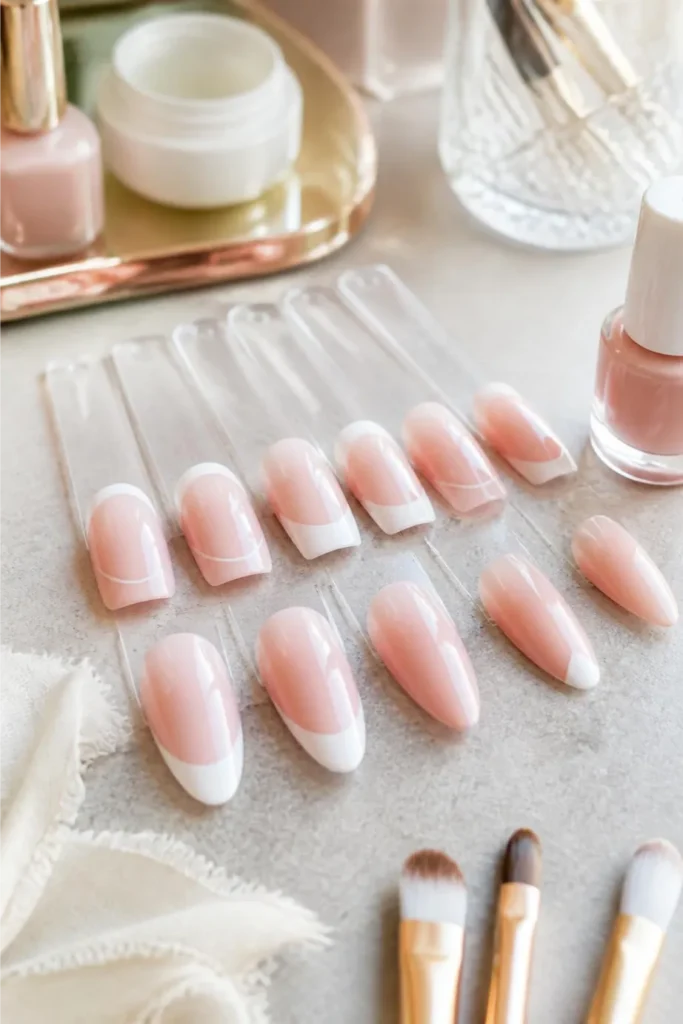
A classic French manicure looks best on 1–3 mm of free edge, while a modern or deep French tip can work on 3–5 mm.
Decide which look you are aiming for before changing the length of your nails.
The style determines how wide the white tip should be, and that affects how much visible nail you need.
Measure the visible nail edge
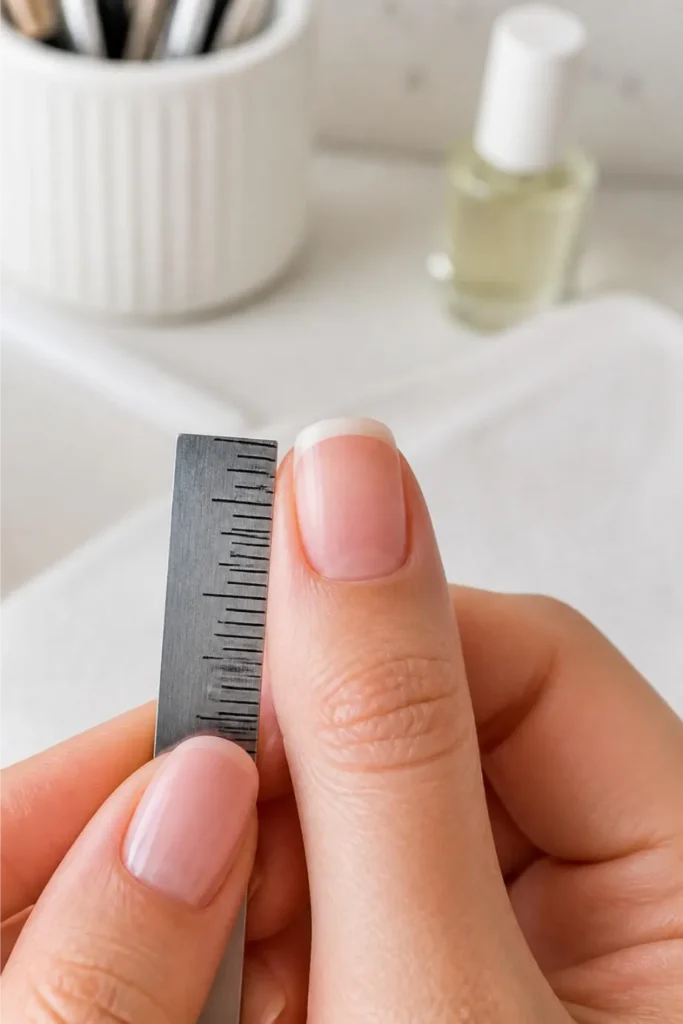
Hold a small ruler next to one nail and measure the distance from the tip of your finger to the end of the nail.
The easiest target is 2 mm, which is the sweet spot for most French manicures.
It gives enough space for a clean white tip without making the nails feel long or fragile during everyday activities.
Pick a nail shape that suits your length
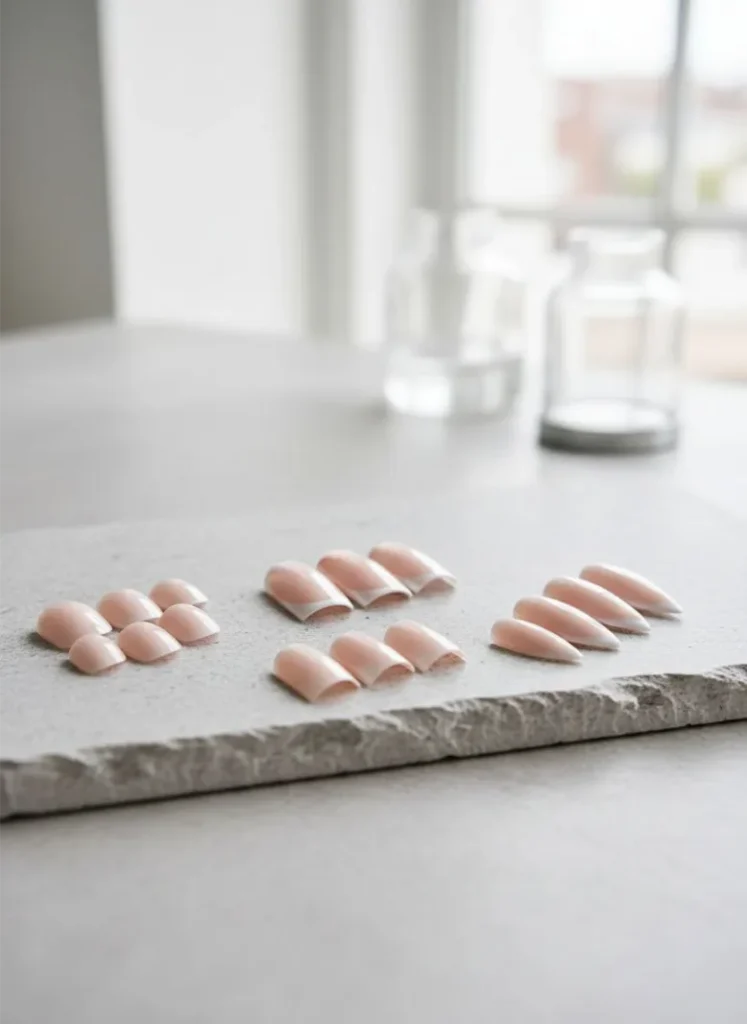
Short French manicures usually look best with round, squoval, or soft square nails.
Medium-length nails can also work well with almond shapes if the tip stays narrow.
A soft square shape is the safest choice for beginners because it makes the white tip easier to paint evenly and looks balanced on most hand shapes.
Trim or grow your nails to the ideal range
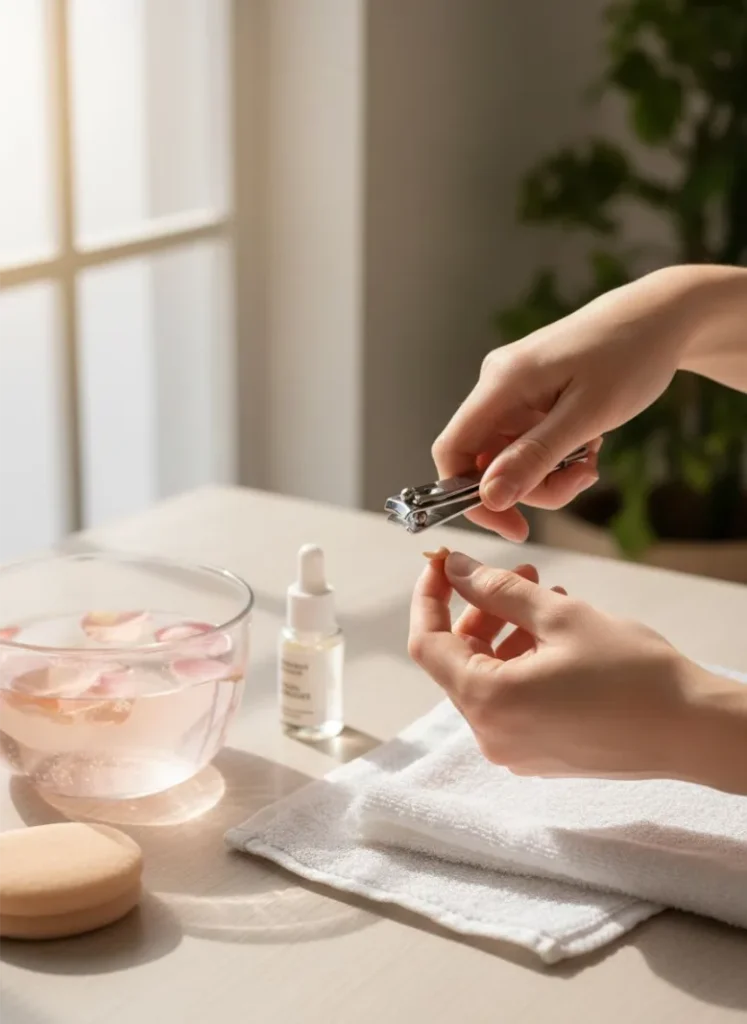
If your nails are longer than 3 mm beyond the fingertip, trim them a little at a time until they are close to 2 mm. If they are shorter than 1 mm, wait a few days before doing the manicure if possible.
Nails usually grow about 3 mm per month, so reaching the ideal French manicure length often takes less time than people expect.
File every nail to a matching length
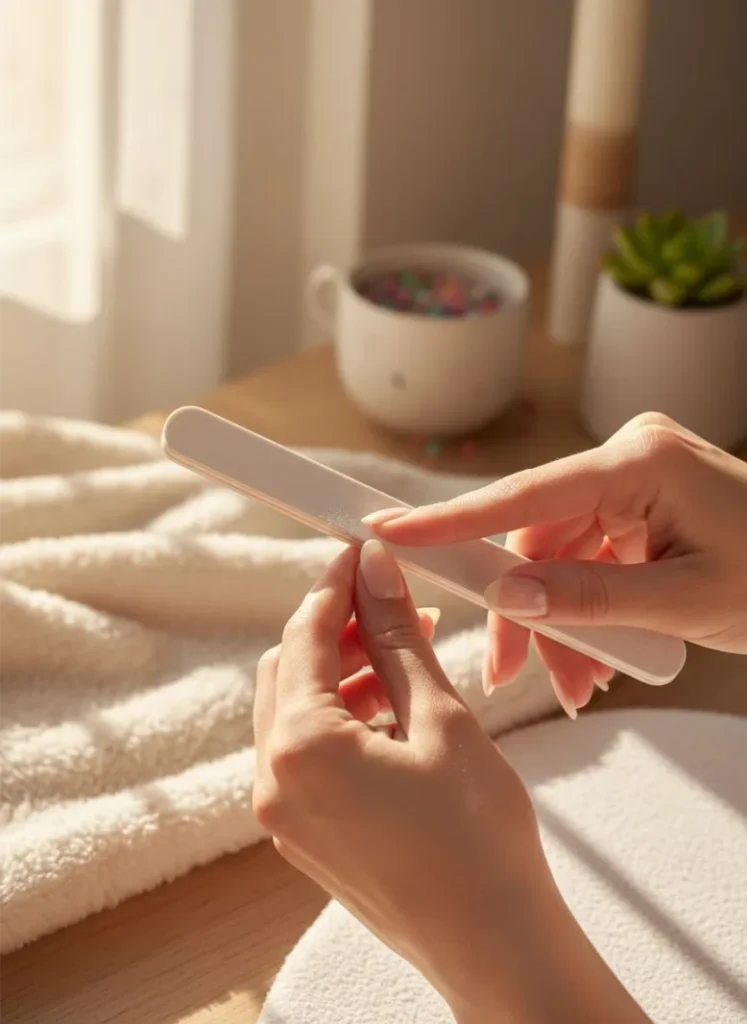
Matching length matters more than the exact number.
Compare each nail side by side and file until the free edge looks even across both hands.
Work in one direction rather than sawing back and forth, which can weaken the nail edge and cause splitting later.
Test the smile line before painting
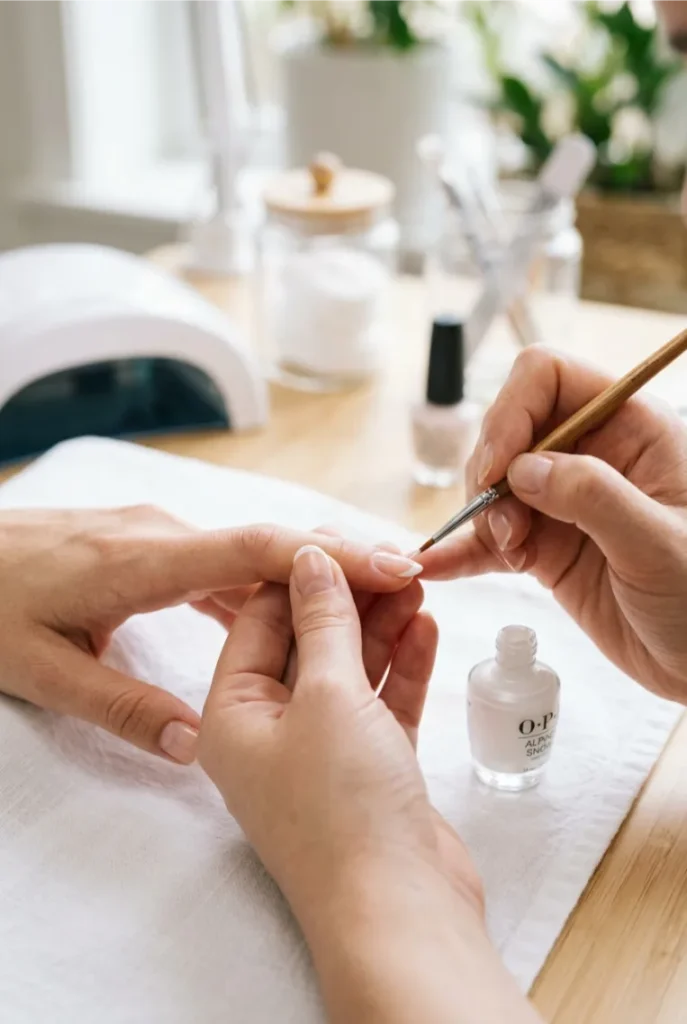
Before applying your French manicure, place a small strip of white polish or use a French tip guide on one nail.
The white tip should usually take up about 15–25% of the total nail length. If the tip looks too thick, shorten the nail slightly. If it disappears visually, let the nail grow a little longer before painting.
Adjust the length for gel or acrylic nails
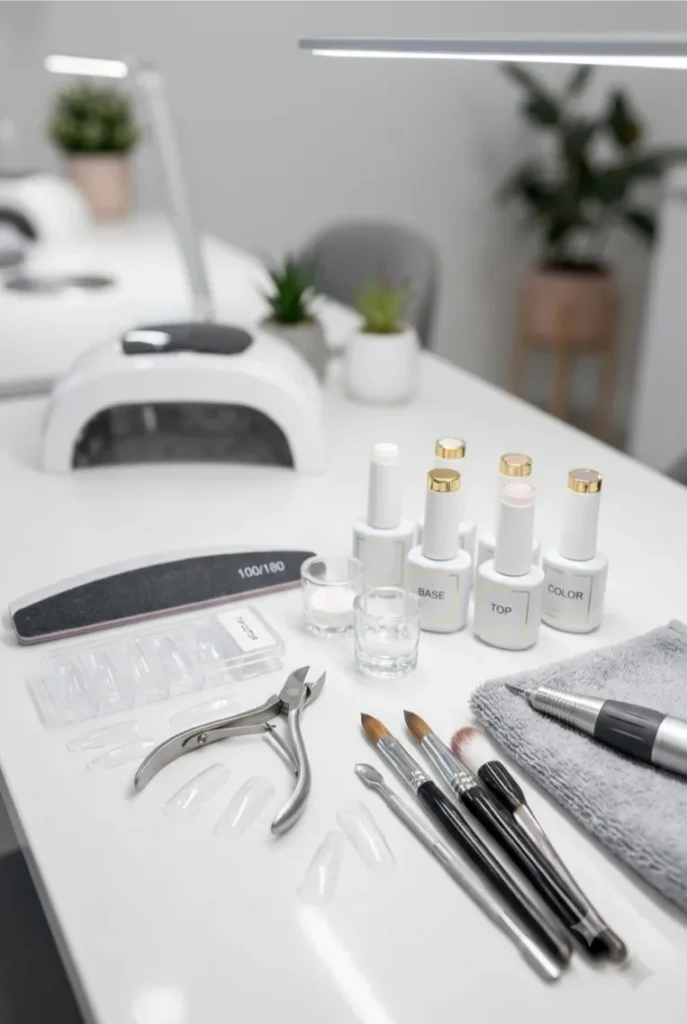
Gel and acrylic nails can safely be a little longer because the added structure supports the free edge.
For these, 3–5 mm beyond the fingertip is usually comfortable while still keeping a French manicure elegant. If you are new to extensions, stay closer to 3 mm until you know how the length feels during daily activities.
Keep the length practical for daily wear

The best nail length for a French manicure is the one you can keep for at least a week without constant repairs.
If you type all day, care for children, cook frequently, or wear gloves often, aim for 1–2 mm of free edge.
A slightly shorter French manicure usually lasts longer and chips less than a longer one.
Confirm the final length before applying polish
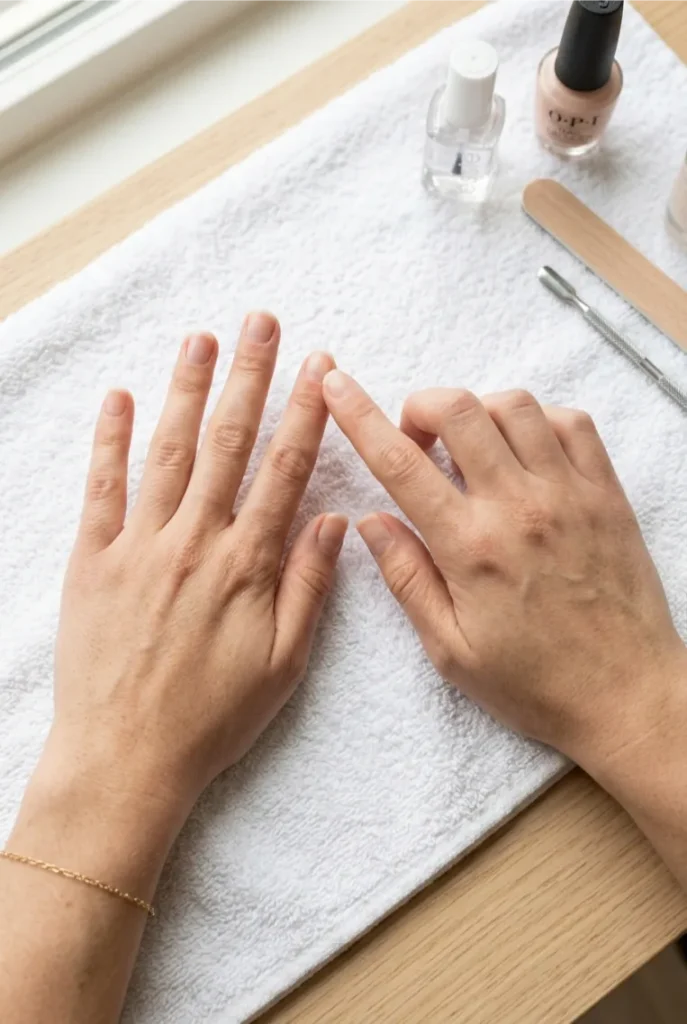
Wash your hands, dry your nails completely, and look at both hands in natural light.
The ideal nail length for a French manicure is usually 1–3 mm beyond the fingertip, with 2 mm being the easiest length for beginners.
Once all ten nails look balanced, you are ready to apply the base coat and create the white tips.
Conclusion
For most people, the best nail length for a French manicure is surprisingly short. A free edge of about 2 mm gives enough room for a clean white tip while keeping the nails comfortable for daily life.
Once you know the right length, the rest of the manicure becomes much easier.
Match the length across all ten nails, keep the shape consistent, and your French manicure will look far more polished before the polish even goes on.
Save this guide now so you can check your nail length before your next French manicure.