
You want a real nail shapes glossary, not a vague list of “popular” shapes with no idea what they actually look like on your own hands.
Oval, square, almond, coffin, stiletto — the same eight names get repeated across salons and Pinterest boards, but nobody tells you which one actually works with your nail bed, your daily grip, or your patience for maintenance.
One shape on this list gets recommended to almost every beginner, even though it’s one of the trickiest to keep looking sharp — you’ll find out which one (and why) as we go through each style.
Jump to Section
Quick Verdict
Overall Winner
Oval
Best for Beginners
Squoval
Lowest Maintenance
Round
Boldest Pick
Stiletto
These four rankings each solve a different problem — but the shape that “wins” for you depends on your nail bed width and how often you’re willing to file. Here’s the full breakdown.
In one sentence: oval works on the most hand shapes with the least fuss, but if your nail bed is wide or short, the “winner” changes — the comparison table below breaks that down shape by shape.
| Shape | Length Needed | Skill to File | Durability | Versatility | Best For |
|---|---|---|---|---|---|
| Oval | Medium-long | Easy | Good | High | Most hand shapes |
| Round | Short-medium | Very Easy | Excellent | Medium | First manicures |
| Square | Medium-long | Medium | Medium | Medium | Wide nail beds |
| Squoval | Medium | Easy | Good | High | Nervous beginners |
| Almond | Long | Medium-Hard | Medium | High | Narrow beds |
| Coffin | Long | Hard | Medium-Low | High | Gel/acrylic wearers |
| Stiletto | Very long | Hard | Low | Medium | Special occasions |
| Edge/Lipstick | Long | Hard | Low | Low-Medium | Nail art lovers |
Oval Nails
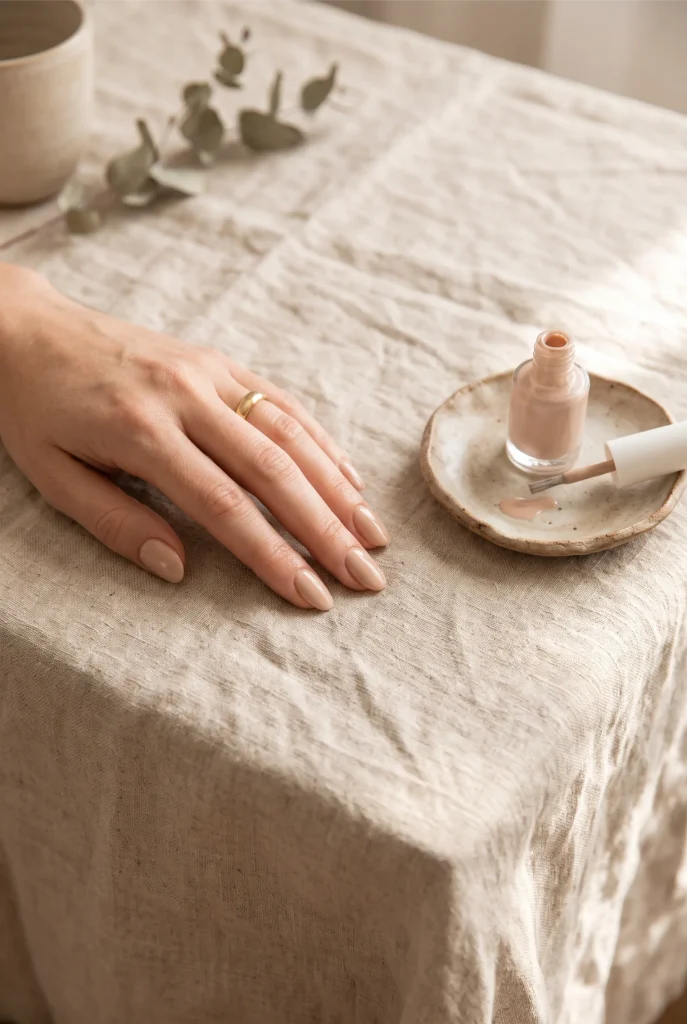
Picture a natural nail filed into a soft, elongated egg shape — no corners anywhere.
It’s the shape most manicurists reach for first because it lengthens the look of short fingers without needing much length to work with.
Oval requires almost no upkeep beyond a light monthly reshape.
The trade-off: it can read a little plain next to almond or coffin if you want something more dramatic.
Round Nails

Round follows the natural curve of your fingertip, slightly filed so there’s no sharp point at the sides.
This is the shape your nails grow into on their own if you never actively shape them.
It’s the strongest option here — round edges resist snagging and breaking far better than any pointed shape.
Great if you type constantly or work with your hands.
Square Nails

A flat, straight-across tip with defined 90-degree corners on each side. Square gives a bold, blunt silhouette that photographs well, especially with nail lengths past 4-5mm.
The catch: those sharp corners are the first thing to catch on fabric or hair, so expect more frequent chip repairs than oval or round.
Squoval Nails
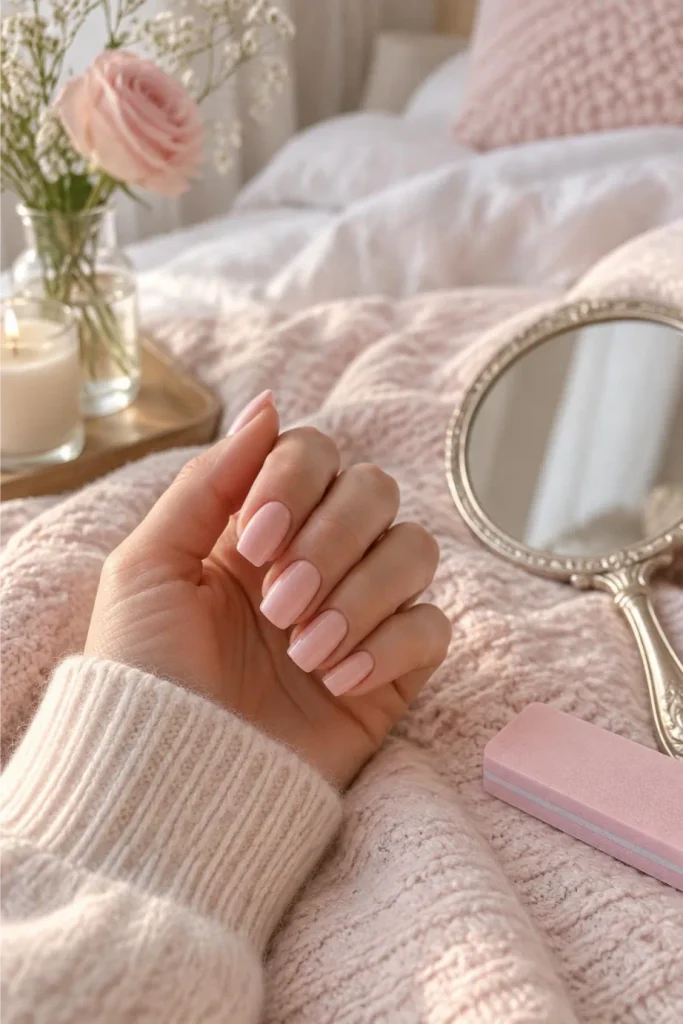
Squoval softens square’s harsh corners into a gentle curve, landing right between square and oval. If you like the clean look of square but keep catching your corners on things, this is the fix.
Beginners find squoval the easiest shape to file consistently because small filing mistakes don’t show the way they do on a perfectly straight square edge.
Almond Nails

Almond tapers in gradually from the sides to a rounded (not pointed) tip, mimicking the shape of the actual nut.
It needs at least 5-6mm of length to look intentional rather than accidental. This shape is genuinely elegant on camera, but the narrow tip means less surface area, so it chips at the sides more easily than oval.
Coffin Nails
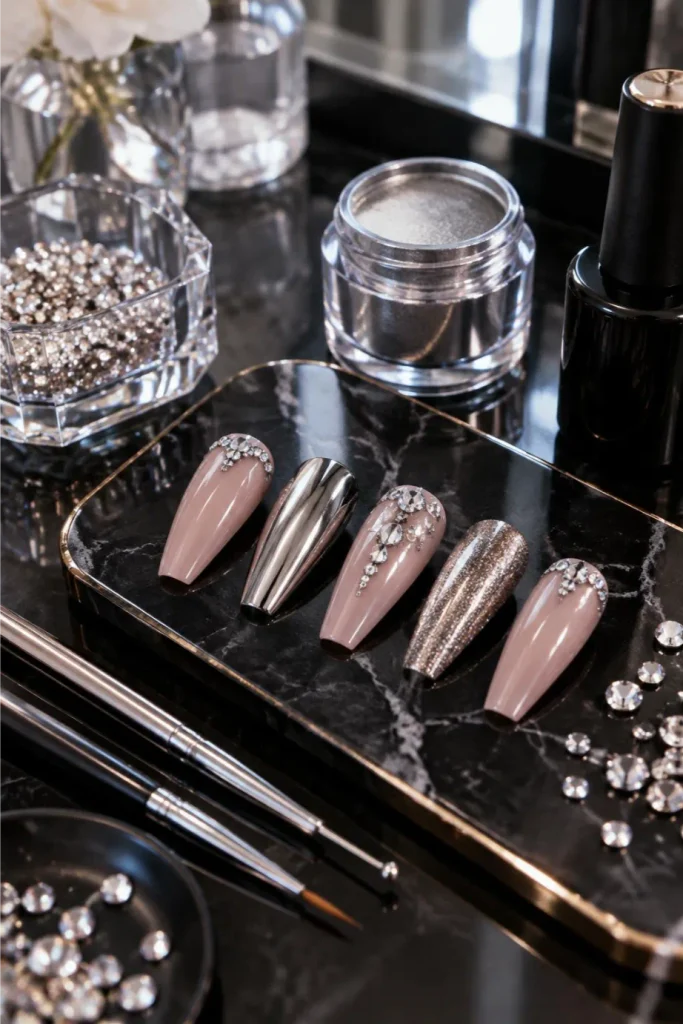
Also called ballerina, coffin tapers to a flat, squared-off tip instead of a point — like a narrower square stretched longer.
It’s become the go-to shape for intricate nail art because the flat tip gives more room to paint.
It’s genuinely hard to file evenly on natural nails, which is why most coffin manicures are done over gel or acrylic extensions rather than bare nails.
Stiletto Nails

Stiletto tapers all the way to a sharp point, like a tiny dagger.
It’s the most dramatic shape on this list and the one people screenshot the most from Pinterest — but it’s also the most fragile.
The narrow point has almost no structural support, so stiletto nails snap far more easily than any other shape, especially past 1cm of length.
Edge/Lipstick Nails

Edge nails are cut at a sharp diagonal angle across the tip, resembling a freshly sharpened lipstick bullet.
It’s a niche, editorial look you’ll mostly see in nail art photos rather than everyday manicures.
The angled tip is thin on one side, so it chips within days on someone who uses their hands for typing, cooking, or lifting.
Which Shape Wins Each Category
Length Needed
Nail beds under 4mm rule out several shapes before you even get to pick a style. Round wins here — it’s the only shape on this list that looks finished at nearly any length, including nails that have barely cleared the fingertip. Almond, coffin, and stiletto all need real length to avoid looking like a botched square with rounded corners instead of an intentional shape.
Skill Level to File
A crooked square edge is obvious from across the room; a slightly uneven round edge almost never is. Squoval takes the win for beginners specifically, since its soft curve hides small filing mistakes that would ruin a sharper shape.
Stiletto and edge/lipstick sit at the opposite end — a single wrong angle on the point throws off the entire nail, and there’s no way to blend it back in without filing the whole nail shorter.
Everyday Durability
This comes down to physics: the more surface area supporting the tip, the less likely it snaps.
Round takes this category by a wide margin, followed closely by oval. Stiletto and edge/lipstick sit at the bottom of the durability list — their narrow points concentrate pressure into one small spot, so even light daily tasks like typing or opening a can can chip or snap them within a week.
Style Versatility
Some shapes only look right in certain settings — coffin reads as glam nail art, but feels out of place on a bare, unpolished nail.
Oval wins on versatility because it works with french tips, solid color, chrome, and nail art equally well, and it doesn’t demand a specific length to look deliberate.
Square and squoval are close behind, both flexible enough for everyday wear and dressier looks.
Best For (Hand & Lifestyle Match)
Your actual nail bed width matters more than which shape looks trendiest in photos. Narrow nail beds tend to suit almond or oval, since both create the illusion of extra width.
Wider nail beds usually look more balanced in squoval or coffin, which visually narrow a broad nail.
If your hands are in water, on a keyboard, or handling kids all day, round and squoval hold up the longest — the more dramatic shapes are better saved for occasions where you’re not using your hands hard for a week straight.
Oval
Pros
Flatters most hand shapes · Low upkeep · Works at short-medium length
Cons
Can look plain without nail art
Round
Pros
Toughest against breakage · Easiest to maintain · Works at any length
Cons
Least dramatic, can shorten fingers visually
Square
Pros
Bold, clean look · Great canvas for french tips
Cons
Corners catch and chip easily · Needs frequent touch-ups
Squoval
Pros
Forgives filing mistakes · Sturdy · Flatters wide nail beds
Cons
Less striking than sharper shapes
Almond
Pros
Elongates narrow nail beds · Elegant on camera
Cons
Needs real length to look right · Chips at the sides
Coffin
Pros
Wide flat tip is ideal for nail art · Trendy, editorial look
Cons
Hard to file on natural nails · Usually needs extensions
Stiletto
Pros
Most dramatic, statement look · Great for events and photos
Cons
Snaps easily · Hard to file evenly · Impractical daily
Edge / Lipstick
Pros
Unique, editorial-level statement shape
Cons
Chips within days of regular use · Hardest shape to file
Choose This Shape If…
Heads up: Coffin and stiletto shapes get requested constantly on natural, unenhanced nails — but both need real structural length and a flat or pointed tip that thin natural nails usually can’t support. Ask for these over gel or acrylic extensions, not on bare nails, or expect breakage within days.
Nail Shapes FAQ
What’s the difference between oval and almond nails?
Oval keeps a rounded, symmetrical curve on both sides. Almond tapers in more sharply toward a narrower, rounded tip, and needs more length to read as intentional.
Which nail shape is best for short nails?
Round or squoval. Both look finished at short lengths, while almond, coffin, and stiletto all need extra length to avoid looking unfinished.
Do coffin nails always need acrylics?
Not always, but almost always in practice. The flat, wide tip needs length and structure that most natural nails can’t hold without extensions.
What shape makes fingers look longer?
Oval and almond both create the illusion of length by narrowing the visual width of the nail. Square does the opposite.
Is squoval the same as square?
No — squoval keeps square’s flat top but rounds off the sharp corners, which is exactly what makes it more chip-resistant.
Final Verdict: Which Nail Shape Should You Actually Get?
Overall, oval is the safest, most versatile pick for anyone who isn’t sure — it flatters nearly every hand and needs the least upkeep. But the right shape really comes down to your nail bed and your daily habits, not only what’s trending.
📌 First manicure or hands-on job: Round
📌 Nervous about filing: Squoval
📌 Narrow nail beds: Almond
📌 Wide nail beds: Square or Squoval
📌 Getting extensions for nail art: Coffin
📌 Special occasion, no daily hand use: Stiletto