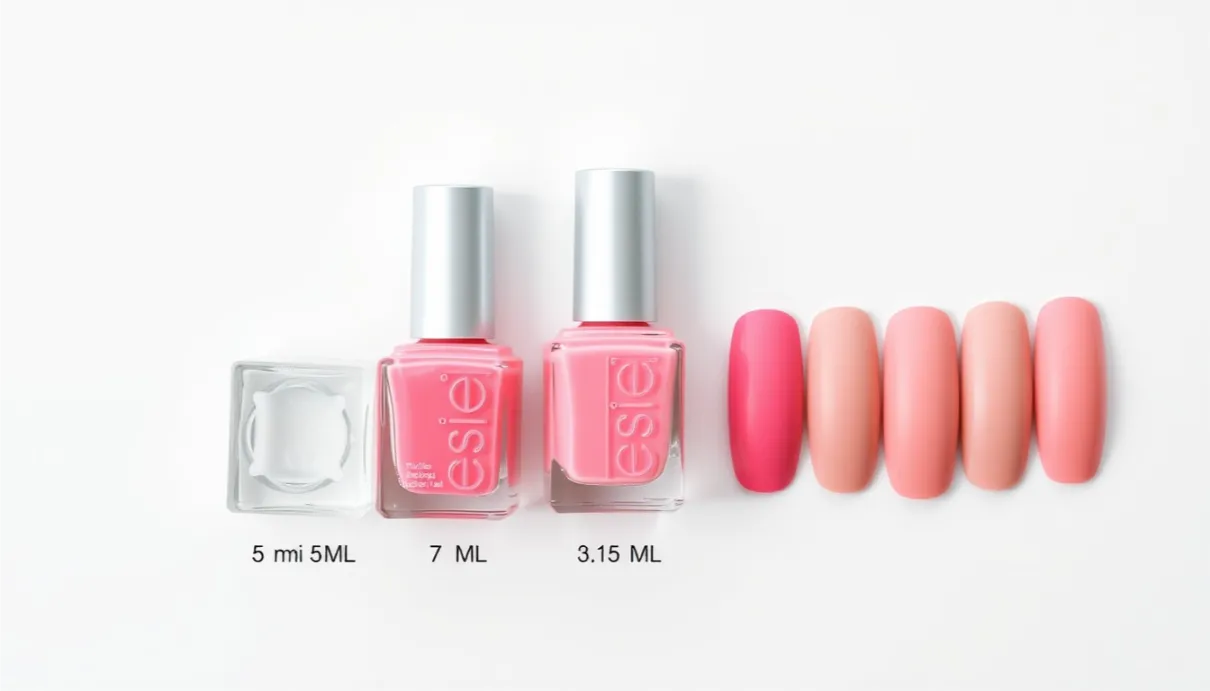
Buying your first few nail polishes can feel like a guessing game when bottles come in everything from tiny 5 mL minis to full 15 mL glass squares. A nail polish bottle calculator is a practical estimation method or tool that uses bottle volume, coat count, nail length, and usable product percentage to predict how many manicures one bottle will give you.
Understanding how this calculation works helps you compare bottle sizes fairly, budget your at-home kit, and stop buying shades that dry out before you reach the halfway mark.
💅 Nail Polish Bottle Calculator
Discover how many manicures your nail polish bottle can cover and how many bottles you need for your next project.
COLOR
Estimates are based on your entered polish consumption per coat. Actual usage varies depending on nail length, brush size, application technique and product consistency.
Quick Answer
A nail polish bottle calculator estimates how many manicures a bottle provides by dividing its usable volume (roughly 80%–85% of listed milliliters) by the polish used per manicure. A standard 15 mL bottle typically yields about 20 to 30 two-coat manicures on short-to-medium nails, depending on nail length, formula, and coat thickness [VERIFY].
What Is a Nail Polish Bottle Calculator and How Does It Work?
A nail polish bottle calculator translates a bottle's printed volume—usually listed in milliliters (mL) or fluid ounces (fl oz)—into a realistic number of full manicures. Instead of assuming you will use every single drop in the glass, a reliable calculation accounts for real-world factors like nail surface area, number of coats, and leftover product the brush cannot reach.
When you check the back or bottom label of a nail polish bottle, you will almost always see two measurements: metric volume in mL and US volume in fl oz. One US fluid ounce equals 29.5735 milliliters, which cosmetic labels commonly round to 30 mL.
That means a standard 0.5 fl oz full-size bottle holds about 15 mL of polish, while a 0.25 fl oz travel bottle holds roughly 7.5 mL.
Working in milliliters makes calculating polish yield much easier because each manicure uses a fraction of a milliliter.
Once you know the bottle's starting volume in mL, the calculation only needs three inputs: how much of the bottle is realistically usable, how much polish a single coat requires for your nail length, and how many coats you apply per session.
How Do You Calculate Manicures Per Bottle Step by Step?
You can calculate your personal manicure yield in under a minute using four simple steps.
All you need is the mL number printed on your bottle and a basic estimate of your nail length and coat routine.
- Find your bottle's usable volume: Multiply the total mL on the label by 0.85 (representing 85% usable product, leaving 15% for brush clearance, wall cling, and normal evaporation)
[VERIFY].- Formula:
Usable Volume (mL) = Bottle Size (mL) × 0.85
- Formula:
- Choose your per-coat usage based on nail length: For all 10 fingernails, a single thin-to-medium coat typically uses roughly 0.25 mL on short-to-medium natural nails, 0.30 mL on medium-long nails, and 0.40 mL to 0.50 mL on long nails or extensions
[VERIFY]. - Multiply by your number of coats: Multiply your single-coat amount by how many coats you apply (usually 2 coats for standard opaque colors, or 3 coats for sheer shades and light pastels).
- Formula:
Polish Per Manicure (mL) = Single-Coat Amount × Number of Coats
- Formula:
- Divide usable volume by polish per manicure: Divide Step 1 by Step 3, then round down to the nearest whole number.
- Formula:
Estimated Manicures = Usable Volume ÷ Polish Per Manicure
- Formula:
Worked Examples: Short Nails vs. Long Nails
Seeing the formula in action shows why two people using the exact same bottle can get very different mileage.
- Example A (Standard 15 mL bottle, short-to-medium nails, 2 coats):
- Usable volume:
15 mL × 0.85 = 12.75 mL - Polish per manicure:
0.25 mL × 2 coats = 0.50 mL - Total yield:
12.75 ÷ 0.50 = 25.5→ about 25 manicures[VERIFY].
- Usable volume:
- Example B (Standard 15 mL bottle, long nails, 3 coats of a sheer pastel):
- Usable volume:
15 mL × 0.85 = 12.75 mL - Polish per manicure:
0.40 mL × 3 coats = 1.20 mL - Total yield:
12.75 ÷ 1.20 = 10.6→ about 10 manicures[VERIFY].
- Usable volume:
How to Calculate Cost Per Manicure
Once you know your estimated manicure count, you can find the per-use value of any bottle by dividing its purchase price by the number of usable manicures.
- Formula:
Cost Per Manicure = Bottle Price ÷ Estimated Usable Manicures
For example, in a hypothetical scenario where a 15 mL color bottle costs $10 and yields 25 manicures, the color coat works out to $0.40 per manicure. Keep in mind that a complete at-home manicure also uses small amounts of base coat, top coat, nail polish remover, and cotton pads, so calculating each bottle separately gives you the clearest picture of your true kit cost.
How Many Manicures Are in Common Nail Polish Bottle Sizes?
Standard full-size bottles (13.5 mL to 15 mL) typically deliver around 20 to 30 two-coat manicures on short-to-medium nails, while mini bottles (5 mL to 7.5 mL) usually deliver about 7 to 15 manicures .
Use the reference table below to skip the math and compare common cosmetic bottle sizes at a glance.
| Bottle Size (mL) | Approx. Size (fl oz) | Est. Usable Volume (85%) | Est. Manicures: Short/Medium Nails (2 Coats) | Est. Manicures: Long Nails (2 Coats) | Best Fit For |
| 3.7 mL | 0.125 fl oz | ~3.1 mL | 5–7 manicures | 3–4 manicures | Testing a trend shade or single vacation trip |
| 5 mL | 0.17 fl oz | ~4.3 mL | 7–10 manicures | 4–6 manicures | Seasonal colors, nail art accents, beginners |
| 7.5 mL | 0.25 fl oz | ~6.4 mL | 10–15 manicures | 6–9 manicures | Regular rotation without waste |
| 10 mL | 0.33 fl oz | ~8.5 mL | 14–21 manicures | 9–12 manicures | Favorite everyday neutrals and shimmers |
| 13.5 mL | 0.45 fl oz | ~11.5 mL | 19–27 manicures | 12–16 manicures | Signature shades, base coats, and top coats |
| 15 mL | 0.50 fl oz | ~12.8 mL | 20–30 manicures | 13–18 manicures | Staples you wear weekly or share with family |
Note: All yield ranges above are general educational estimates based on a working baseline of 0.4–0.6 mL per 2-coat manicure for short-to-medium nails and 0.7–1.0 mL for long nails [VERIFY]. Your actual results will vary based on formula thickness and brush technique.
What Factors Change Your Nail Polish Bottle Calculation?
No calculator can predict your exact manicure count to the drop because nail surface area, polish opacity, brush design, and formula type all shift how much product leaves the bottle each time you paint. Knowing which variables matter most helps you adjust the baseline numbers to fit your hands and habits.
Nail Length, Nail Width, and Pedicures
Total surface area is the biggest personal variable in any nail polish bottle calculator.
Wide nail beds and long extensions require significantly more polish per stroke than short, narrow natural nails—sometimes nearly double the amount per coat.
Pedicures follow a slightly different pattern. Even though the big toenail has a larger surface area than most fingernails, the four smaller toenails are tiny and usually kept short, meaning a two-coat pedicure generally uses roughly the same amount—or slightly less—than a short-nail manicure.
Coat Count, Opacity, and Finish
The pigment density of your polish directly controls how many coats you need for even coverage.
A well-pigmented creme polish (a smooth, solid-color formula with no shimmer) often looks opaque in two thin coats, whereas sheer jellies (translucent, glossy tints) or chalky pastel shades frequently require three coats to look streak-free.
Chunky glitters and textured polishes also behave differently. Because suspended glitter particles take up volume in the bottle and often require dabbing or sponging onto the nail, glitter-heavy polishes can run down slightly faster than smooth cremes.
Brush Shape and Application Technique
Beginners often use more polish per manicure than experienced painters simply because it takes practice to load the brush evenly.
Wiping one side of the brush cleanly against the inside of the bottle neck leaves a controlled bead of polish on the other side, helping you lay down thin, smooth layers.
Thick, heavy coats not only empty the bottle faster—they also take much longer to dry, smudge easily, and tend to chip sooner.
Wide, rounded paddle brushes can also help beginners cover the nail in fewer strokes with less excess product compared to thin, stiff bristles.
Regular Nail Polish vs. Gel Polish
Regular air-dry nail polish and UV/LED-cured soak-off gel polish do not deplete at the exact same rate per milliliter.
Both have trade-offs that affect how many sets you actually get from a bottle.
| Factor | Regular Nail Polish (Lacquer) | Soak-Off Gel Polish |
| Coat Thickness | Thin-to-medium coats; slight excess still dries eventually | Must be applied in very thin, controlled layers so UV/LED light can cure (harden) it completely |
| Evaporation Loss | Contains volatile solvents that evaporate when the bottle stays open, thickening leftover polish | Does not air-dry or evaporate like lacquer, so the formula stays consistent when kept away from UV light |
| Bottle-Wall Cling | Lower viscosity (thinner liquid), drains down glass walls fairly well | Higher viscosity (thicker consistency), so more product clings to the inside walls of opaque bottles [VERIFY] |
| Visibility of Remaining Level | Clear glass bottles let you see exactly how much is left | Opaque UV-blocking bottles hide the fill line, making calculations especially useful |
Because gel polish must be applied very thinly to prevent wrinkling or incomplete curing (which nail-safety educators and dermatology organizations note can increase the risk of skin sensitization if uncured gel contacts skin), a carefully applied gel polish often stretches cleanly across its labeled mL.
However, because gel bottles are opaque to block light, tracking your sets manually is the easiest way to avoid running out mid-manicure.
Base Coats and Top Coats vs. Color Shades
If you own ten color bottles, one base coat, and one top coat, your clear coats will run out long before any individual color.
Even though you typically apply only one coat of base coat and one coat of top coat per manicure—roughly half the volume of a two-coat color—you use those same two bottles every single time you paint your nails.
Using our 15 mL baseline (about 12.8 mL usable volume at roughly 0.25 mL per single coat), one full-size base coat or top coat can cover roughly 45 to 55 manicures . If you paint your nails once a week, you will likely finish a full-size base and top coat in about a year, while a color you only wear five times a year could last several years.
Why Can You Never Use 100% of a Nail Polish Bottle?
You can rarely use 100% of a nail polish bottle because the brush stem stops just short of the glass bottom, leaving a shallow pool of product out of reach once the bottle gets low.
On top of that physical "dead space," regular polish loses volume over time through solvent evaporation (the escape of fast-drying liquid ingredients into the air whenever the cap is open), while thicker formulas cling to the inside corners of the glass.
Estimating 80% to 85% usable volume builds this reality into your math from the start. Still, good bottle care can prevent unnecessary waste and keep your polish smooth right down to the last few reachable coats.
Checklist: How to Maximize Every Drop Safely
- Keep the bottle neck clean: Wipe dried polish off the threaded glass rim with a lint-free pad and a little acetone before closing. Dried buildup stops the cap from sealing airtight, which accelerates solvent evaporation.
- Close the cap promptly between steps: Leaving a bottle open while waiting for nails to dry lets solvents escape steadily. Rest the cap loosely on the bottle between hands and twist it firmly shut as soon as you finish.
- Roll—do not shake—before painting: Gently rolling the bottle between your palms mixes settled pigments without trapping air bubbles that ruin smooth application.
- Store bottles upright in a cool, dark spot: Direct sunlight and bathroom humidity can break down pigments, thicken formulas, or slowly cure gel polish near windows.
- Use nail polish thinner (never acetone) for thickened regular polish: A few drops of dedicated nail polish thinner—formulated to replace evaporated solvents—can revive thick regular lacquer. Never add nail polish thinner to gel polish, and never add acetone to regular polish, as acetone breaks down the film-forming resins and ruins wear time.
- Tilt carefully near the end: When a bottle is nearly empty, tilting it gently on a stable surface (never balancing it precariously) helps the brush pick up remaining polish along the corner wall.
How Long Does a Bottle of Nail Polish Last Before It Goes Bad?
A nail polish bottle's real-world lifespan depends on both how often you paint your nails and how well the formula holds up after opening.
For many beginners, a full-size color bottle lasts 12 to 24 months or longer in usable condition, which means a shade you only wear twice a year may thicken or change texture long before you finish its 25-manicure capacity.
To check how long a manufacturer expects an opened bottle to stay at peak quality, look for the Period After Opening (PAO) symbol on the label—a small drawing of an open jar with a number followed by "M" (such as 12M or 24M for 12 or 24 months). Under European Union cosmetic labeling rules, PAO symbols are standard for products with a minimum durability over 30 months, whereas in the United States, the FDA does not require expiration dates on most cosmetics, leaving shelf-life guidance to manufacturers.
Because regular nail polish is solvent-based, it is generally not a friendly environment for bacterial growth on its own.
However, time and air exposure can still cause permanent pigment separation, thickening that thinner cannot fix, clumping, or a sour or unusually harsh odor—all signs it is time to replace the bottle.
A quick nail-health note: Never use nail polish to hide persistent nail discoloration, pain, swelling, thickening, or a nail lifting away from the nail bed. If you notice ongoing or unusual nail changes, leave your nails bare and consult a doctor or dermatologist for proper evaluation, and avoid sharing polish brushes if anyone has an active nail infection.
Common Myths vs. Facts About Nail Polish Bottle Yield
Misleading rules of thumb often lead beginners to overbuy giant bottles or ruin good polish trying to stretch the last few drops. Here is what actually holds up.
- Myth: Mini bottles are always a waste of money compared to full-size bottles.
- Fact: Mini bottles often cost more per milliliter, but they can still save you money on trendy or seasonal shades you only wear a few times a year. Paying less upfront for 8 manicures you actually finish beats paying more for 25 manicures when half the bottle thickens unused.
- Myth: Adding acetone to thickened nail polish stretches the bottle further.
- Fact: Acetone is a remover, not a thinner. While it temporarily loosens thick polish, it breaks down the binding polymers inside regular lacquer, leading to dull shine, streaky application, and rapid chipping. Always use a dedicated nail polish thinner instead.
- Myth: A bigger-looking glass bottle always holds more polish.
- Fact: Thick decorative glass walls and heavy square bases can make a 10 mL bottle look larger than a sleek 15 mL cylinder. Always check the printed
mLorfl ozlabel rather than judging by bottle silhouette.
- Fact: Thick decorative glass walls and heavy square bases can make a 10 mL bottle look larger than a sleek 15 mL cylinder. Always check the printed
- Myth: Applying one thick coat uses less polish than two thin coats.
- Fact: One heavy, flooded coat often uses nearly as much product as two thin layers, takes far longer to cure or dry, and is much more prone to smudging and peeling—meaning you end up redoing your manicure sooner and burning through the bottle faster.
Who Should Use a Nail Polish Bottle Calculator?
A nail polish bottle calculator is most helpful for anyone trying to match bottle size to real-life wearing habits rather than guessing at the store.
If you fall into any of the groups below, running a quick estimate before you shop can simplify your routine:
- Beginners building a starter kit: Helps you invest in full-size bottles for staples (base coat, top coat, and one or two go-to neutrals) while picking smaller bottles for experimental colors.
- Budget-conscious at-home manicurists: Lets you compare cost per manicure across different bottle sizes instead of looking only at the sticker price.
- Occasional polish wearers: Prevents waste if you only paint your nails for holidays, weddings, or special occasions.
- Group events and DIY manicure nights: Helps you estimate whether one standard bottle is enough for a bridal party or group of friends wearing the same shade (for example, one 15 mL bottle easily covers 4 to 6 people doing two coats with plenty left over).
Frequently Asked Questions
How many mL of nail polish does one manicure use?
A standard two-coat manicure across all 10 short-to-medium natural fingernails typically uses about 0.4 mL to 0.6 mL of color polish, or roughly 0.2 mL to 0.3 mL per coat.
Long nails, wide nail beds, thick application, or sheer three-coat formulas can increase usage to 0.8 mL to 1.2 mL per manicure.
Is a mini nail polish bottle better for beginners than a full-size bottle?
For color shades, mini bottles (5 mL to 7.5 mL) are often a smart choice for beginners because they provide about 7 to 15 manicures while letting you test finishes without clutter or waste.
For base coats and top coats that you use every session, a full-size 13.5 mL to 15 mL bottle is usually more practical.
How many bottles of nail polish do I need for a year of weekly manicures?
Painting short-to-medium nails once a week equals 52 manicures per year. Using standard 15 mL bottles, you would typically go through roughly one bottle of base coat, one bottle of top coat, and the equivalent of two full-size bottles of color spread across whatever shades you rotate.
Does gel polish last for more manicures per mL than regular polish?
Often yes, slightly—because soak-off gel polish must be applied in very thin layers to cure properly under a UV or LED lamp, and it does not lose volume through air-dry solvent evaporation. However, gel's thicker consistency leaves slightly more residue on inner bottle walls, which narrows the difference [VERIFY].
Can you use nail polish after the Period After Opening (PAO) date?
The PAO date indicates the manufacturer's window for peak texture and performance, not an automatic safety cutoff for solvent-based regular polish.
If the formula still mixes smoothly, applies evenly, and smells normal, many people continue using it; discard any bottle with permanent separation, foul odor, or irritation risk.
Conclusion
Using a nail polish bottle calculator takes the guesswork out of shopping for nail colors, budgeting a beginner kit, and figuring out why your top coat always disappears before your favorite red.
Once you factor in usable volume, nail length, and coat count, choosing the right bottle size becomes straightforward.