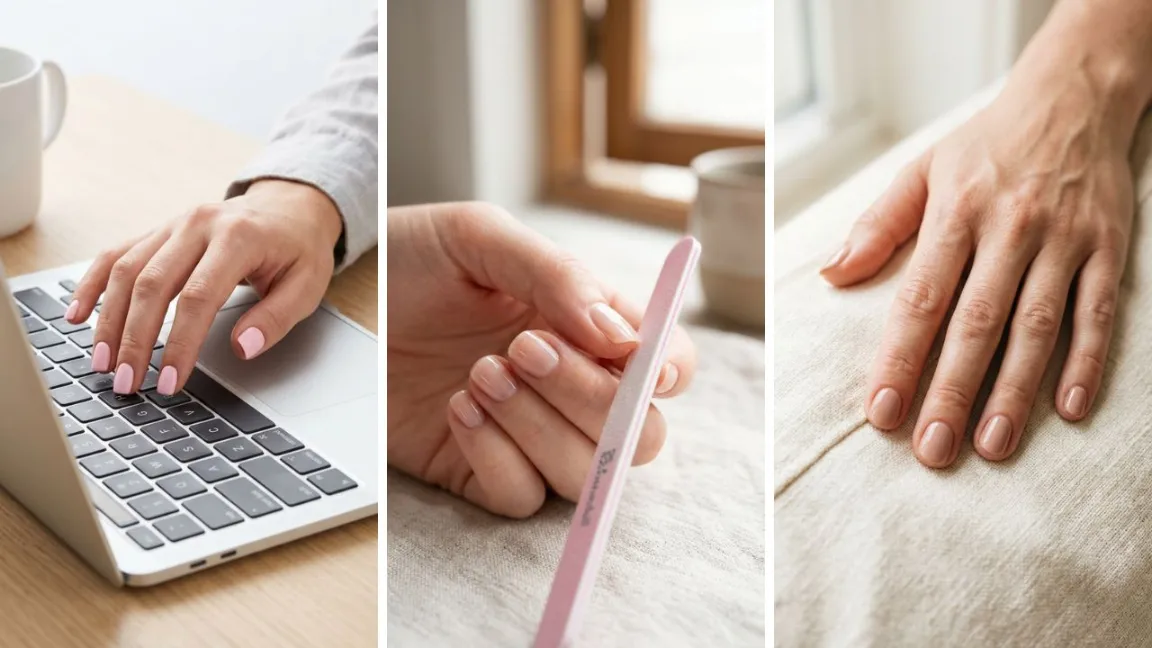
Short nails and “best for short nails” guides don’t usually get along — most articles are written for nails with actual length to sculpt, which is why round, oval, and almond can all look completely different (and sometimes worse) once you’re working with short nails.
If you searched for the best shape for short nails, you’re not choosing between five equally fine options — one shape is quietly the strongest pick for most short-nail situations, one is the easiest to maintain at home, and one is doing more damage to your nail edges than most people realize every time they file it that way.
This guide compares Round, Square, Squoval, Oval, and Almond side by side on the five things that actually matter for short nails: durability, how much length they visually add, how easy they are to maintain, how well they hold nail art, and how they survive everyday hand use.
By the end, you’ll know exactly which shape to file toward tonight — and why the “safe” choice isn’t always the smartest one.
Jump to:
Overall Winner
Squoval
Best for Elongating
Oval
Easiest for Beginners
Round
The ranking is the easy part — the reason Squoval beats Oval for most short-nail situations (and the one shape you should avoid if you file your own nails) is in the breakdown below.
| Criteria | Round | Square | Squoval | Oval | Almond |
|---|---|---|---|---|---|
| Durability | Highest | High, corners chip | High | Medium | Lowest, tips weak |
| Elongating Effect | Minimal | Low | Moderate | Highest | High (needs length) |
| Maintenance Ease | Easiest | Easy, sharp corners | Easy | Moderate | Hardest on short nails |
| Nail Art Fit | Good, small canvas | Best for geometric art | Good, versatile | Good, curved designs | Limited on short length |
| Everyday Practicality | Best | Catches on fabric | Very good | Good | Snags easily |
The table gives you the shape, not the reason — and the reason is what decides whether Squoval is really right for your nails, not just nails in general.
Round Shape
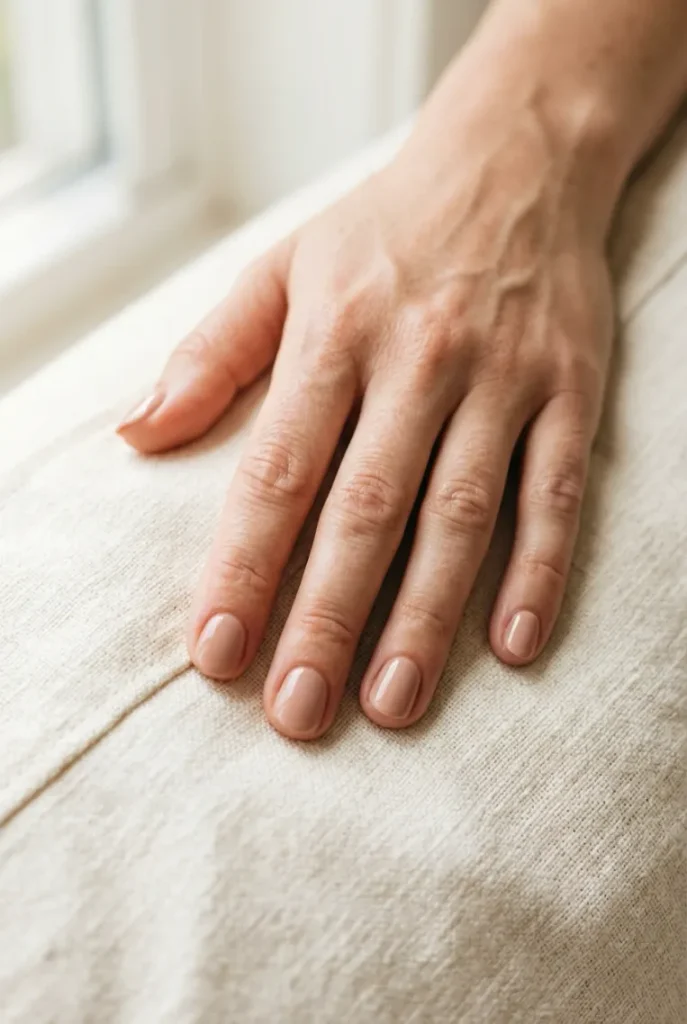
The round shape follows the natural curve of your fingertip with no corners at all. It’s the shape nail techs default to for first-time short nail wearers because there’s almost no wrong way to file it — round tips can’t catch on sweaters, and there are no pointed edges to chip.
The tradeoff: it does nothing to visually stretch a short nail bed.
Square Shape

Square nails end in a flat line with two sharp corners, giving short nails a bold, structured look.
Corners make this shape a favorite for geometric nail art and French tips, but those same corners are the first thing to snag on zippers or crack against a hard surface — expect to file down a sharp edge within days if you type or work with your hands often.
Squoval Shape
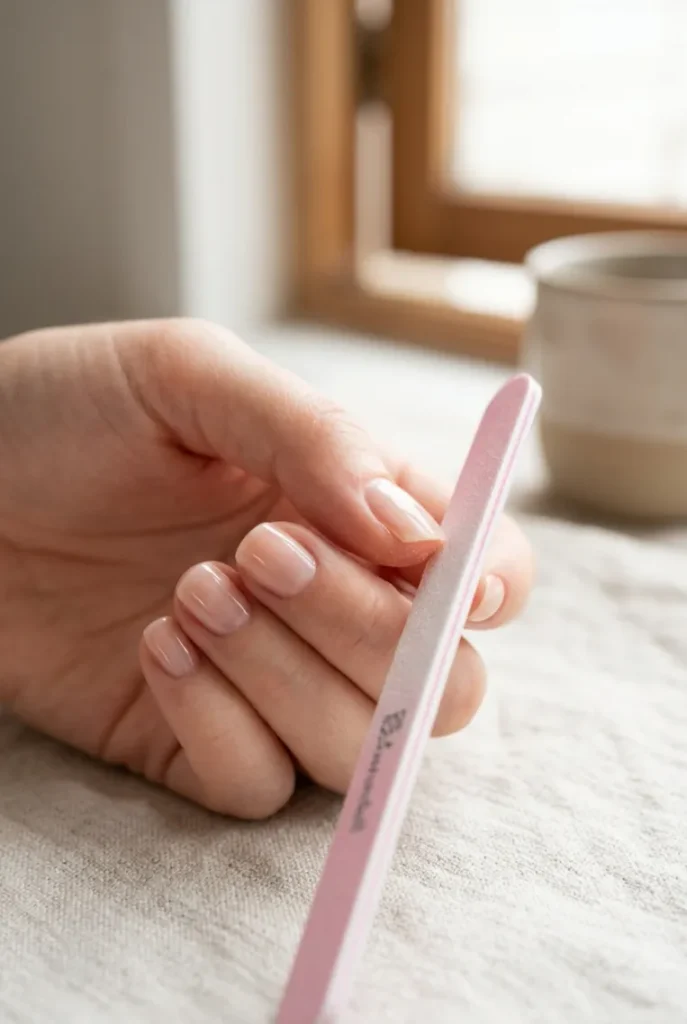
Squoval — short for “square oval” — softens a square nail’s corners into a gentle curve.
It keeps the clean, structured line of square nails while removing the exact spot most likely to chip, which is why it edges out the other four shapes as the most balanced option for short nails that need to survive daily hand use.
Oval Shape
An oval shape narrows gradually from the sidewall to a rounded point, mimicking an almond without the sharp tip.
On short nails, this narrowing is what visually pulls the eye upward and makes the nail bed read as longer than it actually is.
The tradeoff is a slightly weaker free edge than round or squoval.
Almond Shape
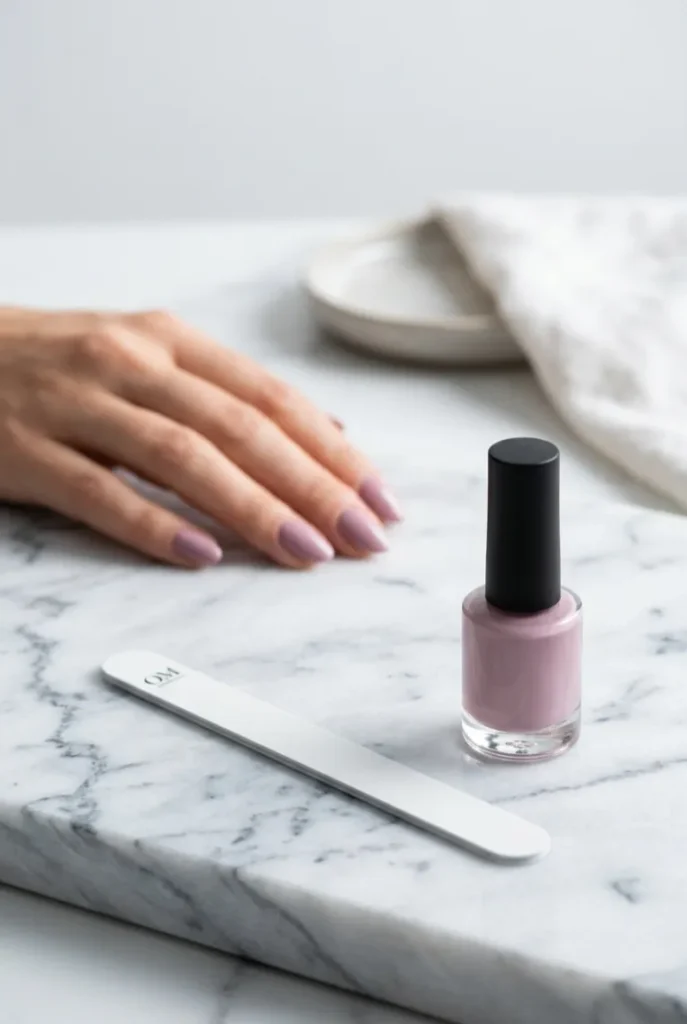
Almond nails taper to a narrow, rounded point, more pronounced than oval. It’s a striking shape on medium-to-long nails, but on truly short nails there often isn’t enough length to taper without filing the nail down to almost nothing at the tip — which is exactly the mistake flagged in the Heads Up section further down.
Durability & Chip Resistance: Which Shape Holds Up Best
Short nails already have less surface area to absorb impact, so shape becomes the deciding factor in how fast a fresh mani starts chipping. Round wins here outright — with zero corners or narrowing point, there’s no weak spot for an edge to catch and crack.
Squoval comes in close behind since its rounded corners remove the single weakest point of a square nail.
Almond loses the most ground: tapering a short nail to a point leaves very little material at the tip, so it’s the first shape to break, sometimes within 2–3 days of daily hand use.
Elongating Effect: Which Shape Makes Short Nails Look Longer
Visually stretching a short nail bed comes down to one thing: how much the shape narrows toward the tip.
Oval takes this category — its gradual taper draws the eye upward along the nail plate, creating a longer-looking nail without adding actual length.
Almond does something similar but needs more free edge than most short nails have to taper properly, so on true short nails it often just looks stubby instead of elegant.
Square and round add the least visual length; squoval sits in the middle, offering a mild lengthening effect while staying sturdy.
Ease of At-Home Maintenance: Which Shape Is Easiest to File
If you’re filing your own nails between salon visits, shape complexity matters more than most people expect.
Round is the easiest to maintain — one continuous curve means there’s no corner angle to match or point to keep symmetrical between hands.
Squoval is a close second: the corners just need a light rounding pass rather than a precise curve.
Oval and almond both require matching a taper angle on all ten nails, which is where most at-home filing goes visibly uneven — one hand’s nails end up noticeably pointier than the other’s.
{RELATED LINK 1: title}
{RELATED LINK 1: one-line teaser}
{RELATED LINK 2: title}
{RELATED LINK 2: one-line teaser}
Nail Art Compatibility: Which Shape Works Best With Designs
Square takes this one. Its flat, wide free edge acts like a small canvas, making it the easiest shape to fit clean geometric lines, French tips, and negative space designs without the pattern warping around a curve. Squoval holds up almost as well since it keeps most of that flat edge.
Oval and round both work fine for softer designs — florals, ombré, swirls — but struggle with anything meant to look sharp or symmetrical.
Almond is the weakest match here simply because there isn’t enough flat surface on a short nail to work with.
Everyday Practicality: Which Shape Survives Real Life
Everyday practicality decides the winner more than people expect. Round takes this category for one simple reason: nothing about its shape catches on anything.
Square nails snag on sweaters, seatbelts, and keyboard edges at the corners — the exact spot most likely to chip is also the spot most likely to get caught first.
Squoval avoids most of that snagging while keeping a defined edge, which is part of why it edges out square for daily wear.
Almond is the most snag-prone shape on short nails, since the narrow tip has almost nothing behind it for support once it catches on something.
Heads Up: Filing short nails into a true almond shape is the single most common mistake beginners make with this list. There often isn’t enough free edge left after tapering both sides to a point — the nail ends up thinner at the tip than the nail bed underneath, which is what causes the tip to snap off within days instead of weeks. If you want the almond look on short nails, ask a tech (or file yourself) toward a soft, shallow taper instead of a sharp point — you’re aiming for “almond-inspired,” not full almond.
FAQ
What’s the best nail shape for short nails if I bite my nails?
Round or squoval. Both keep an even edge with no point to catch or peel further, which matters most while nails are regrowing.
Can short nails actually pull off an almond shape?
Only with a shallow taper, not a full point. A true almond needs more free edge than most short nails have to spare, or the tip ends up too thin to survive daily use.
Which shape makes short nails look the longest?
Oval. The gradual taper draws the eye up the nail plate, adding visual length that square or round shapes don’t create.
Is squoval really that different from square?
Yes — the rounded corners remove the exact spot where square nails chip first, which is the main reason squoval holds up longer on short nails.
How often do short nails need reshaping?
Every 5 to 7 days for most shapes, since short nails grow out enough in a week to soften corners or blunt a taper.
Final Verdict
Best Shape for Short Nails: Final Verdict
Overall winner: Squoval. It keeps the structure of square nails while removing the corner that chips first — the most durable, low-maintenance choice for short nails that get used all day.
- Choose Round if you’re a first-timer, bite your nails, or want zero maintenance.
- Choose Square if you mostly want a canvas for geometric nail art and don’t mind filing every few days.
- Choose Squoval if you want durability and structure without the chipping.
- Choose Oval if making short nails look longer matters more to you than raw durability.
- Choose Almond only if you’re willing to keep the taper shallow — a true point isn’t realistic on short nails.
Not sure which one to try first? Squoval is the safest starting point for almost anyone.
{RELATED LINK 1: title}
{RELATED LINK 1: one-line teaser}
{RELATED LINK 2: title}
{RELATED LINK 2: one-line teaser}
Conclusion
Squoval isn’t the flashiest answer, but it’s the one that actually holds up on short nails day after day — no chipped corners, no snagged sweaters, no over-filed tips by Thursday.
If durability isn’t your top priority, oval is worth trying for the elongating effect, and round is always the forgiving fallback if you’re filing your own nails at home.
Whichever shape you land on, the best shape for short nails is really the one that matches how hard your hands work every day — not just what looks best in the mirror right after filing.
Save this to Pinterest so you’ve got the comparison handy next time you’re deciding at the salon or in front of your own file.